
Community Functions · Tehrvi
Arranging the Tehrvi, Condolence Sittings and Pagdi Rasam: A Shamiyana for Many Days, the Tribute Meeting and a Simple Meal
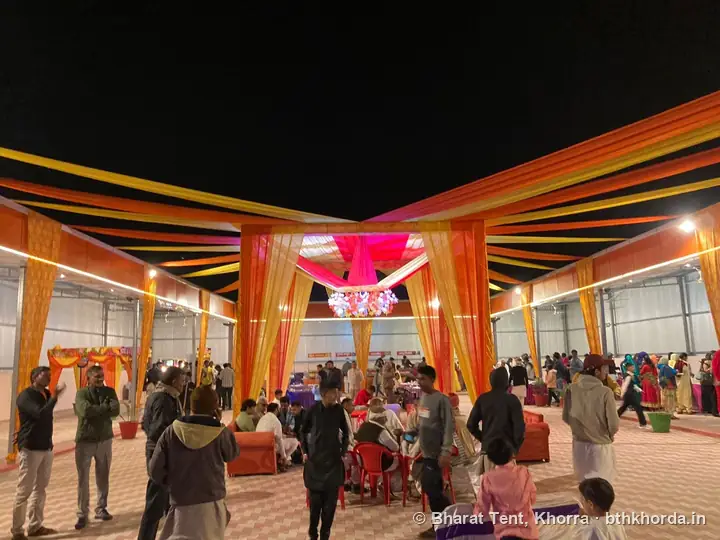
The thirteen days after a death are the hardest for a family. Relatives and villagers come to the house every day to sit with them, and on the thirteenth day come the tehrvi, the tribute meeting and the pagdi rasam. The point of this arrangement is that the family doesn't have to worry about anything practical at such a time. Bharat Tent & Light House, Khorra provides a simple, respectful setup from the first condolence sitting to the tehrvi; one phone call is enough.
1. Condolence sittings: a shamiyana that stays for days
From the day after a death, people start coming to sit with the family. For this:
- A shamiyana outside the house that stays up until the tehrvi
- Durries underneath, with some chairs for elders
- Drinking water, so people coming from far aren't inconvenienced
- Plain white lights in the shamiyana if the sittings run late into the evening
These sittings are needed straight away, with no time to prepare. Our phone is answered 24 hours: 99918 64283.
2. A separate place for women
In most villages women sit separately, inside the house or in the courtyard. If the courtyard is small:
- A section screened with kanat in the courtyard or next to the house
- Durries and gadde there, since women often sit on the floor for hours
3. The tribute meeting: a mic for speakers
At the shok sabha or shraddhanjali sabha on the tehrvi day, village elders, relatives and acquaintances each say a few words. For this:
- A small table at the front with the mic and the photo of the departed, with a garland
- A mic and speakers so everyone at the back can hear; soft and clear, with no music
- Rows of chairs for the meeting, with an aisle down the middle
The family should give one person the job of calling up the speakers on the mic.
4. A place for the pagdi rasam
In the pagdi rasam, the family elders tie a turban on the person taking on the family's responsibility. It happens in front of everyone, so:
- Open space in the middle at the front of the gathering, where he can sit with elders standing around
- A plain asan or chair to sit on
- A few chairs nearby for meeting people afterwards
5. Havan or path
Many families hold a havan or path at the tehrvi. Keep the havan under an open shamiyana, a little away from the seating; we lay durries and asans for the pandit ji and the family.
6. The tehrvi meal
After the meeting there is a meal for relatives and the village. Our halwai cooks a simple meal at your home, and we bring the large utensils, crockery and serving equipment. For a large meal for the whole clan or village, our kaaj guide explains how to run pangat in rounds.
During these days, bringing, setting up and taking everything back after the tehrvi is our responsibility, at no extra charge within 25 km. Within the budget the family gives, we settle the sittings, meeting and meal in one go, so nobody has to discuss accounts again and again.
FAQ
How long will the shamiyana stay up for the condolence sittings?
As long as the family wants, usually until the tehrvi. We put up the shamiyana, durries and a few chairs once and leave them, then extend the same space for the tehrvi meeting. We pack up only after everything is over.
What does the tehrvi tribute meeting need?
A small table at the front with the photo, a garland and the mic, speakers that carry to the back, rows of chairs with an aisle. Bharat Tent & Light House, Khorra sets all of this up before the meeting.
What should we arrange for the pagdi rasam?
The rasam usually comes at the end of the tribute meeting, and in many families relatives come up one by one to offer a pagdi or shagun. So leave enough open space in front for people to queue, and choose one person to call relatives' names on the mic.
How is a separate place for women arranged during mourning?
In the courtyard, or if space is short, a section screened with kanat next to the house, with durries and gadde, since women often sit on the floor for hours.
How quickly can it be arranged when it's needed suddenly?
At such times the need is always sudden, so our phone is answered 24 hours: 99918 64283. As soon as you call, we'll tell you how soon the shamiyana and durries will arrive.