
Tent house guide · Small spaces
A Tent in a Small Space: Rooftops, Narrow Lanes, Small Courtyards and a Nearby Plot (Chhoti Jagah Me Tent)
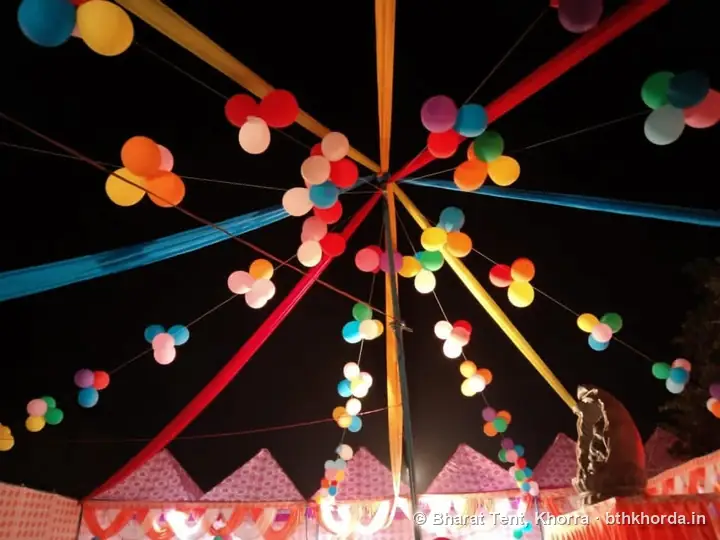
Not every house has a big courtyard or an open field in front of it. In towns the houses stand wall to wall, many village homes have a small courtyard too, and sometimes the function has to happen on the roof or in the lane outside the door. A small space doesn't mean a smaller arrangement. It just changes how the tent goes up: two or three smaller sections instead of one big pandal, good use of walls and height, and a fixed place for every job. Bharat Tent & Light House, Khorra works in town lanes, on rooftops and in small courtyards, and below are the things we look at first.
1. First, split the work: what happens where
The biggest mistake in a small space is cramming everything into one spot. Plan three parts separately:
- The ritual or seating: where guests sit and the stage or darbar stands
- The meal: buffet counters or the pangat durries
- The kitchen: the halwai's bhatti, utensils and water
They don't all have to be in one place. The ritual in the courtyard, the meal in the lane and the kitchen in the back yard or a nearby plot keeps every part open. A covered walkway can join one part to another, so guests don't walk through sun or dew.
2. A function on the roof
For a birthday, roka, kitty party, satsang or a small bhandara, the roof works well: open air, and the house below keeps running. A light shamiyana goes up with kanat all round, lights and chairs. Before booking, send these photos and measurements:
- The roof's length and width, and where any room, water tank or stair room stands on it
- The staircase width, because everything goes up that way
- How high and how strong the parapet or railing is
- Where the water tank, solar panels or dish are, so the tent goes up clear of them
Choose the roof only when these two things are certain:
- The roof is a pucca (RCC) roof in good condition: don't hold a function on an old, cracked or kachcha roof, or a tin or sheet roof. Too many people shouldn't be on a roof at once, so the roof is only for small functions. If there's any doubt about its strength, have a knowledgeable mason or engineer look at it first
- A strong parapet or railing at least waist-high all round: kanat or drapes only screen the edge, they don't stop anyone falling. If the parapet is low or missing, hold the function down in the courtyard, lane or a plot
A rooftop tent should go up only after seeing the roof in person; if any of the above isn't right, another place is better for the function.
Things to keep in mind on a roof:
- Don't put the halwai's bhatti and gas cylinder on the roof. Keep the kitchen down in the courtyard or lane and send the food up
- Keep some chairs downstairs for elderly guests; not everyone can manage the stairs
- For an evening function, light the staircase too
3. A pandal in a narrow lane
A tent in the lane outside the house is very common in both villages and towns:
- The pandal is built to the lane's width, with kanat on both sides and a roof and drapes above
- A clear path stays open in the middle or along one side, so the neighbours can still come and go
- A welcome gate at one end and jhalar lights down the lane make the whole lane look decorated
- Talk first to the neighbours whose doors open onto that lane
- Park cars and tractors outside the lane, not inside it
Send the lane's width and a photo from each end, and we'll tell you how much pandal and seating fits.
4. A small courtyard
Ways to save space in a small courtyard:
- A small stage against a wall, so the middle stays free for guests
- Buffet counters in one line along a wall, with room to move in the middle
- For a pangat, seat people in batches: as many as sit comfortably, then the next round
- A tree in the courtyard doesn't have to go; lights around it turn it into part of the decoration
- Move the animals, fodder and tractor-trolley elsewhere for the function days
5. A nearby plot or field
If there's an empty plot or field near the house, that's the easiest way to hold a big function:
- The full pandal, stage and meal on the plot, only the rituals at home
- Get the owner's permission first, and have the ground cleared and levelled
- If the way from the house to the plot is dark at night, have a line of lights put along it
6. What not to cut in a small space
Even in a small space, keep these in full:
- Lighting: good light makes a small space look bigger and more open
- Air in summer: coolers and fans in summer, because a closed space heats up fast
- Power: if lights, coolers and the DJ all need to run, fix the generator in advance and keep it in a corner away from the guests
- A path: one clear way to every part, so nobody gets stuck in a crowd
A rough count of how much you need for how many guests is in the how many guests, how much setup guide, and the full site checklist is in preparing the space before the tent.
Don't worry if the space is small. WhatsApp the measurements and two or three photos of the roof, lane or courtyard to 99918 64283, and we'll tell you what goes where and what fits your budget.
FAQ
How is a wedding pandal set up in a lane?
A pandal to the lane's width, kanat on both sides, a roof and drapes above, and a welcome gate at one end. We keep enough path open in the middle that the neighbours can still come and go. Send the lane's width and a photo from each end first.
How do I arrange a wedding in a small courtyard?
A small stage against a wall, buffet counters in a line along a wall, and the pangat in batches. Keep the kitchen outside the courtyard, in the lane, back yard or a nearby plot, so the courtyard stays open for guests.
Can the halwai cook on the roof?
We advise against putting the bhatti and gas cylinder on the roof. Keep the kitchen downstairs in the courtyard or lane and send the food up. The cylinder comes from the family; all the rest of the halwai's kit comes from Bharat Tent & Light House, Khorra.
Can one function use tents in two places?
Yes, in a small space it's the best way: for example the ritual in the courtyard and the meal in the lane or on a nearby plot. A covered walkway can join the two.
What should I check before putting a tent on the roof?
First, that the roof is pucca and in good condition, with a strong, waist-high parapet or railing all round; kanat doesn't stop anyone falling. Then the roof size, the staircase width, and where the water tank or solar panels are. Photos give a first idea, but the final decision is made on site; if there's doubt about the roof, have a mason or engineer check it first.