
Tent house guide · Safety
Safety Under the Tent: What to Do in a Storm, Wiring, Distance from the Bhatti and Havan Fire, Children and Crowds (Tent Me Suraksha)
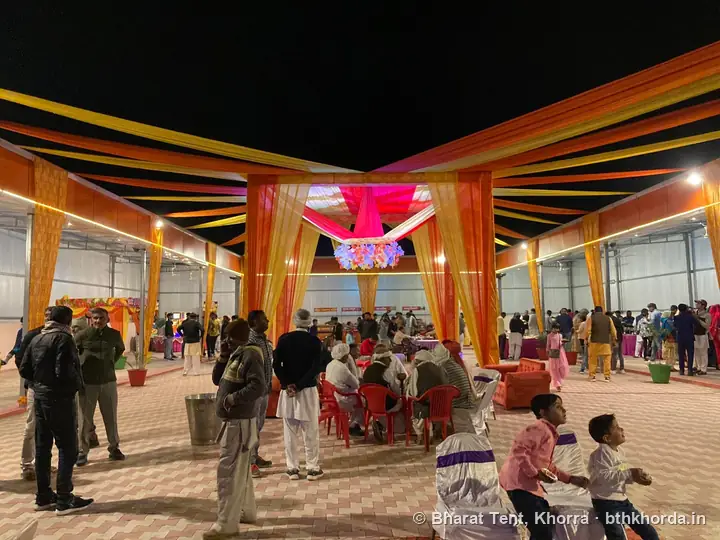
At a wedding or any function, hundreds of people sit under one pandal: children, the elderly, women, and nearby the halwai's bhatti, the havan fire, electric wires and heavy speakers. Most functions pass without any trouble, but when safety is planned in advance, a sudden storm, heavy rain or an electrical fault doesn't cause panic. This guide covers what both the tent house and the family should look after. Bharat Tent & Light House, Khorra puts strength before decoration when setting up a pandal.
1. Storms: how a pandal stays strong
Summer evenings in Haryana can bring a sudden dust storm, and unseasonal rain too. A pandal's strength comes from three things:
- Pegs and ties: the poles set properly in the ground and the ropes tied tight. On sandy or loose ground the pegs go deeper and there are more of them
- Kanat: in strong wind the kanat takes a lot of force; if a storm is forecast, the setup team should decide on site whether the kanat stays, is opened or comes down
- Roof: a waterproof roof if rain is likely, because wet cloth gets heavy and sags
If bad weather is expected (a weather warning, or dust and dark clouds in the sky), tell us in advance. The ties and the roof are done to suit.
2. If a storm comes during the function
If a strong storm or lightning starts in the middle of the function:
- Stop the function and move guests out of the pandal into a solid (pucca) building (or closed cars). A tent or shamiyana is not shelter from a storm or lightning, and standing in its middle is not safe either
- So decide before the function which solid houses or rooms people will go to; the elderly and children first
- Cut the power: have the pandal line switched off at the generator or main switch, so a broken wire can't spread current
- Put out the bhatti and havan fire, so sparks don't reach the cloth in a strong wind
- On the way out, keep clear of poles, chandeliers, light stands, speakers, trees and electricity poles
- Go back only once the storm and lightning have fully passed (at least half an hour after the last thunder). First the tent team checks that no pole, rope or wire is loose and no wire is on the ground or in water; only then does the power go back on. If in doubt, call us first
When there's lightning, don't stay in the open, under a tree or in a tent, and keep away from metal poles; you're safe only inside a solid building.
3. Wiring
- The pandal's power is shared out from one place, a distribution board; avoid joining wires here and there
- No wire loose or open, joints taped, and no wires across paths where people walk
- Keep wires away from water counters, coolers and the washing-up area; don't touch switches with wet hands
- Unplug a cooler before filling it with water
- If the family wants to add its own extension or connection, ask the tent house first, so the load isn't exceeded
How to size a generator and its load is in the what size generator guide.
4. Keep fire away: bhatti, havan, diyas
The pandal's drapes, kanat and roof are cloth, so distance from fire matters most:
- The halwai's bhatti and gas stoves separate from the pandal, in the kitchen area, with their own shamiyana above
- Gas cylinder in open air, a little away from the bhatti, with the pipe and regulator in good condition (the cylinder comes from the family)
- No drapes or cloth hanging over or near the havan kund; the havan flame in the mandap shouldn't rise high
- Diyas and candles away from drapes, on a plate or stand
- Fireworks and crackers in the open, away from the pandal and kitchen
- Keep buckets of water and sand nearby; if the house has a fire extinguisher, keep that close too
5. Children, the elderly and crowds
- Keep at least two ways open in the pandal, one in and one out, with no chairs blocking them
- Don't let children play near the speakers and DJ; heavy speakers should sit firmly on their stands
- Keep children away from the generator; rope off its spot, but never wrap it in kanat or cloth, its exhaust must go into open air
- Seat elderly guests near a path, so they don't have to walk far through the crowd
- At night, light the paths, stairs and lane too, not just the stage
6. A short checklist for the family
Walk round once before the function:
- Pegs and ropes in order, no pole leaning
- Wires covered, no open joints
- Bhatti, cylinder and havan away from the pandal's cloth
- Buckets of water and sand nearby
- Two ways open
- The tent house's number saved in your phone: 99918 64283
If you're worried about the weather, have a question about the space, or something looks loose during the function, call 99918 64283. The phone is answered 24 hours.
FAQ
How do I stop a tent falling in a storm?
Pegs set properly and ropes tight; on sandy ground the pegs go deeper and there are more of them. In a strong storm the tent team decides on site whether the kanat stays or opens. If the storm is strong, move guests out of the tent into a solid building. If bad weather is likely, tell Bharat Tent & Light House, Khorra in advance.
What should we do if a storm comes during the function?
Stop the function and move guests out of the pandal into a solid building; a tent is not shelter from a storm or lightning. Have the pandal's power switched off, put out the bhatti and havan fire, and go back only once the storm has fully passed.
How far should the bhatti be from the pandal?
Keep the bhatti and gas stoves separate from the pandal, in the kitchen area, with no drapes or kanat above or close to them. Keep the cylinder in open air, a little away from the bhatti.
What should we watch for in tent wiring?
Power shared from one board, no loose or open wires, no wires across paths or near water, and unplug a cooler before filling it.
Which tent is right in rain and storm season?
A pandal with a waterproof roof, kanat all round and strong ties. More in the rain at your wedding guide.