
Religious Functions · Katha
A Pandal for Bhagwat Katha and Satsang: Vyas Gaddi, Seating for Many Days, Clear Sound, Jhanki and the Purnahuti Bhandara
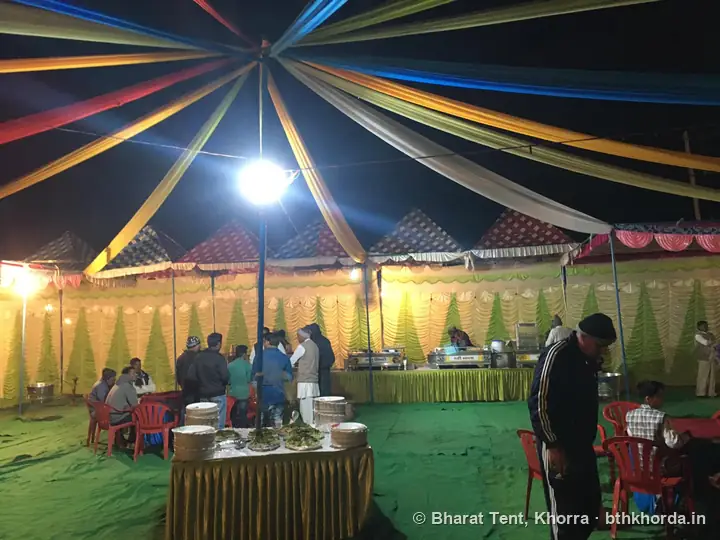
A Bhagwat katha, Ram katha or satsang in a village often runs for several days; a Bhagwat saptah lasts a full seven. It differs from a jagran or chowki in three big ways: the pandal stands for many days, the sangat sits for hours in the daytime heat, and the most important thing is not music but hearing the kathavachak clearly. Bharat Tent & Light House, Khorra handles the pandal, stage, sound and seating from the first day to the purnahuti.
1. A pandal that lasts several days
A seven-day katha needs a different pandal from a one-day event:
- A waterproof roof, since the weather can change over seven days
- Kanat screening on both sides, with room for air to flow from front and back
- Thick durries on the ground that can be swept daily
- The organising committee should assign someone to watch the pandal overnight
2. The vyas gaddi: the kathavachak's seat
The heart of the katha is the vyas gaddi, where the kathavachak sits to narrate:
- A stage raised high enough above the sangat that those at the back can see the kathavachak
- A gadda, bolster and decorated asan on the stage, with a backdrop and flowers behind for the deity's picture
- Separate space on the stage for the accompanying bhajan musicians
- Sturdy steps up to the stage, since many kathavachaks are elderly
3. Sound: clarity, not volume
People come to a katha to hear the words, so the sound is set up quite differently from a DJ:
- A good mic for the kathavachak and separate mics for the bhajan musicians
- Several speakers spread through the pandal instead of big speakers at the front, so it isn't too loud in front and every word reaches the back
- A mixer to balance it, and the same setup left in place for all seven days so it isn't rebuilt daily
4. Keeping the sangat comfortable in daytime heat
Katha sessions are often in the afternoon, and the sangat sits for hours:
- Coolers and fans along the sides of the pandal in summer, from both sides so air reaches those in the middle
- Chairs at the back and sides for elders
- A drinking-water counter on the way out of the pandal, to reduce movement during the katha
5. Kalash yatra and jhankis
Many kathas begin with a kalash yatra on the first day, and during the katha jhankis are staged for episodes like Krishna janam or Rukmini vivah:
- Moving lights along the kalash yatra route, and bhajans on our DJ gaadi if you want
- A separate small stage next to the vyas gaddi for the jhankis, where the decoration can change
- Extra focus lights on that stage on jhanki days
6. Daily prasad and the purnahuti bhandara
- A counter on the way out to hand out prasad after the daily aarti
- On the last day, a large bhandara after the havan and purnahuti: our halwai sets up the bhatti on site and we make a separate area for pangat. See our bhandara guide for estimating food.
- Lights in the pandal and along the path for the evening aarti, with a generator for power cuts
Give us the katha dates, daily timings and number of days at booking. We put the pandal up a day before the first day and take it down only after the purnahuti. Temple, chaupal or field, anywhere within 25 km of Khorra, delivery costs nothing extra. Whatever budget the committee or family keeps, we divide it across all seven days at booking: 99918 64283.
FAQ
What kind of pandal suits a seven-day Bhagwat katha?
One with a waterproof roof, kanat screening on both sides and air from front and back, thick durries that can be swept daily, and that stays in place all seven days. We put it up a day before the first day and take it down after the purnahuti.
How is the vyas gaddi stage set up?
Its height depends on the length of the pandal: the further back the sangat sits, the higher the stage. Its width depends on how many musicians sit with the kathavachak. If the kathavachak has a preference, such as the asan colour or a particular picture, ask them and tell us in advance so we can decorate accordingly.
What kind of sound does a katha need?
On the first day, before the katha starts, sit in the last corner of the pandal and check the sound. If words aren't clear at the back, add a speaker there rather than raising the volume. A katha is spoken, not sung, so a heavy-bass DJ setting doesn't suit it.
Can we get a separate stage for the jhankis?
Yes, a small stage next to the vyas gaddi where the decoration changes for each episode, with focus lights on jhanki days. Tell us in advance which days have jhankis.
Can you also arrange the purnahuti bhandara?
Yes. On the last day, after the havan, our halwai sets up the bhatti on site, we bring the large utensils and crockery, and make a separate pangat area in the pandal. Tell us the expected numbers on 99918 64283.