
Tent House Guide · Preparation
Preparing the Site Before the Tent Goes Up: Measurements, Ground, Overhead Wires, Drains, Animals, Power, the Lane and Parking, a Checklist for the Family
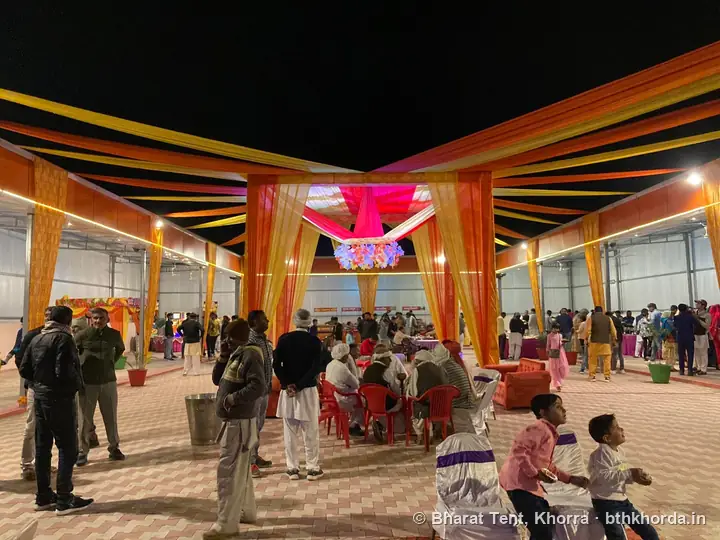
When the tent team arrives on time but the site isn't ready, that's where the most time is lost: a pit here, a power line overhead there, a trolley parked in the lane. For a function at home or in the village, preparing the site is in the family's hands, and it should be done a day or two before the tent goes up. This checklist covers what we look at on every job. Bharat Tent & Light House, Khorra usually arrives to set up the tent one day before the function.
1. Send the measurements and photos first
- Measure the length and width of where the tent goes: courtyard, lane, plot or field
- WhatsApp two or three photos from different corners
- Tell us where the food, stage and kitchen should go, so the pandal layout is ready in advance
2. Clean and level ground
- Clear bricks, rubble, wood, rubbish and bushes
- Fill in pits so chairs and tables stand straight and nobody trips
- Tell us about any slope; the stage and dining go on the level part
- If it's a paved floor or paved lane where pegs are hard to drive, tell us first so the structure is chosen accordingly
3. Look up: power lines and trees
This matters most:
- If a power line passes over the tent site, tell us first; the structure and its height are set to keep clear of it
- Trim low branches or let us know, so the roof sits properly
- If the pandal is next to a high wall or a chhajja, tell us its height too
4. Drains and water flow
- The house or lane drain must not be covered by the pandal; keep its flow open
- In the rainy season, check which way water runs; the pandal will avoid that part, with a waterproof roof if needed
- Tell us where the tap or motor is; the kitchen and water counter go near it
5. Animals, tractors and household things
In village homes these are often forgotten:
- If animals are tied in the courtyard, decide their place for the function days in advance
- Move tractors, trolleys, buggies or fodder away from the tent site
- Keep piles of fodder, dung cakes or wood away from the pandal and kitchen
6. Power connection and generator
- Tell us where the house meter and connection are, and the load
- If lights, coolers, DJ and the halwai's motor all need to run, fix the generator in advance
- The generator sits in open air, never in a room, veranda or a space closed in with kanat, at least 20 ft from doors, windows, the pandal and the kitchen (its exhaust can kill in an enclosed space); keep an open spot free for it
7. The lane, neighbours and parking
- If the tent goes in the lane, talk to neighbours, and the panchayat if needed, beforehand
- Keep enough of the lane open for a vehicle to pass if needed
- Decide parking for the baraat and guests' vehicles and a place for the ghodi or baggi in advance
8. On setup day
- Have one family member present who can show the site and the layout
- Let one person handle the power connection and requests, so instructions don't keep changing
- Confirm the stage's direction, the gate's position and the kitchen corner at this point
A ready site makes our team's work fast and clean, and your function starts without a hitch. Send the site measurements and photos to 99918 64283; we'll tell you what goes where and what you need to prepare.
FAQ
What should the family prepare before the tent is set up?
Send the measurements and photos, clean and level the ground, tell us about overhead power lines, keep drains open, move animals and tractor-trolleys, tell us about the power connection, and talk to neighbours if the tent goes in the lane.
How many days before the function is the tent set up?
Usually one day before. The halwai's items come even earlier, since sweets are made a day or two ahead.
Can a tent go up under an overhead power line?
Tell us before booking. We set the structure's position and height to keep a safe distance from the line, and move the pandal a little if needed.
Whom should I ask before putting a tent in the lane?
First the neighbours whose doors open onto that lane, since they'll use the same way during the function days. If the lane is a common route, it's wise to inform the panchayat as well.
Where is the generator placed?
In open air, never in a room, veranda or a space closed in with kanat, because the carbon monoxide in its exhaust can kill in an enclosed space. Keep an open spot at least 20 ft from doors, windows, the pandal and the kitchen, with the exhaust pointing away from people; the team from Bharat Tent & Light House, Khorra runs power from there across the whole pandal.