
Wedding Functions · Baraat
Hosting the Baraat at a Daughter's Wedding: Welcome and Milni, the Baraat Dinner, the Phera Mandap, Janwasa and the Morning Vidaai
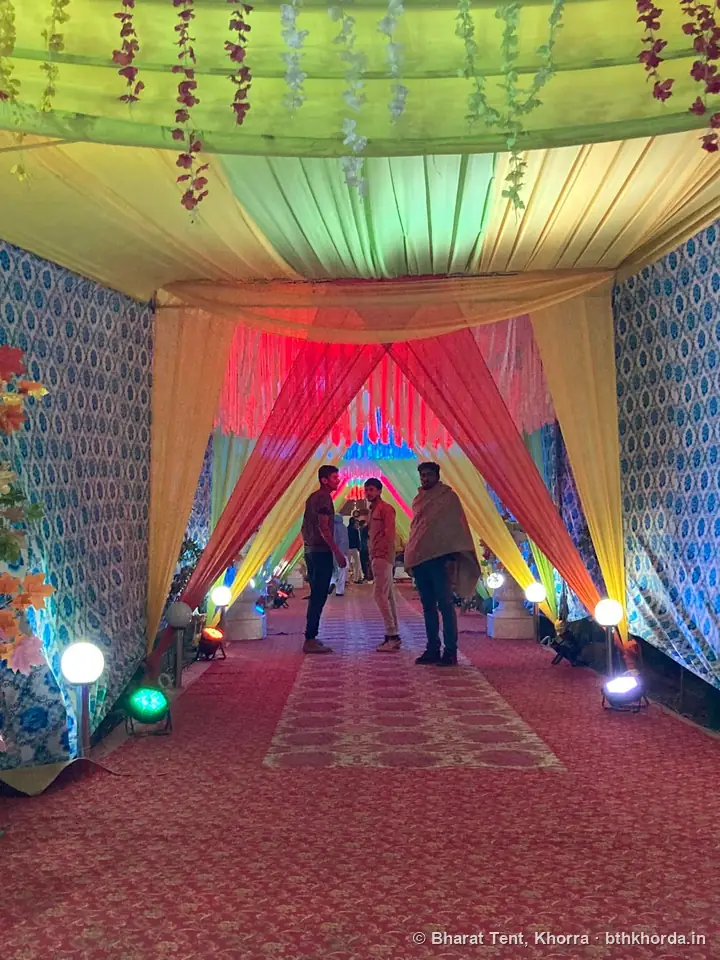
At a daughter's wedding, the biggest night is when the baraat arrives at your door. That night you are the host: the welcome, the milni, dinner, the varmala, the pheras late at night, the baraat's overnight stay and the vidaai in the morning, one after another. In the village, the bride's family's standing rests on how well the baraat was hosted. So the welcome and janwasa have to be planned in advance around time and space. Bharat Tent & Light House, Khorra sets up the whole pandal, mandap and janwasa for a daughter's wedding together.
1. Before the baraat arrives: fix the night's order
Ask the groom's side in advance roughly what time the baraat will arrive and how many people. That decides:
- The dinner count: guests from both sides together
- How many will stay in the janwasa and how many will leave the same night
- The muhurat for the pheras, so the mandap is ready and lit by then
Give us these numbers at booking; the rest of the items are worked out from them.
2. Welcome at the door and the milni
Where the baraat arrives is the first picture of the whole night:
- A lit welcome gate at the mouth of the lane, and a path lit with jhalar from there to the house
- Open space for the milni in front of the gate, where relatives from both sides can stand face to face, embrace and give shagun, with durries on the ground and floodlights above
- A place for the baraat's band or DJ to stop without blocking the way
- After the welcome, separate decorated chairs or sofas for the baraat in the front part of the pandal
3. The baraat dinner: a matter of honour
The baraat's dinner is where even a small lapse is remembered:
- A pandal or German hanger large enough for both sides to eat comfortably together
- Serve the baraat first and the hosts after; for that, have enough counters that no queue forms
- Tables and chairs with served food for the baraat's elders
- The halwai's utensils reach the house a day or two before the wedding so the sweets are made in time
The varmala stage is part of the same night; ideas for decorating it are in our how to decorate a wedding stage guide.
4. The phera mandap: a late-night ritual
Pheras often happen after midnight, when most guests have left and the cold or dew sets in:
- A flower-decorated mandap with durries or chairs around it for the family
- The mandap's cloth and flowers kept high and well away from the havan fire; fix the spot for the havan kund with the pandit ji in advance
- Lights and a generator for the whole night, so it's never dark at the muhurat
- At a winter wedding, the mandap area enclosed with kanat, with thick durries and carpet underneath
5. Janwasa: where the baraat stays
For baraat members who stay the night, the janwasa is often at a neighbour's house, the chaupal, a school or a separate tent:
- A mattress and quilt for each person staying (in winter), with durries underneath; keep a few more than the count
- If the janwasa is in its own tent: kanat all around, a waterproof roof and lights inside
- The path from the janwasa to the wedding house lit all night
- Fans or coolers in the janwasa in summer
6. Morning: tea, breakfast and vidaai
After the pheras comes tea and breakfast for the baraat in the morning, then the vidaai:
- Leave one part of the pandal and a few counters ready overnight for morning tea and breakfast
- Lights and seating stay in place until the vidaai
- After the vidaai we pack up the entire pandal, mandap and janwasa items ourselves, so the family has nothing to do
At a daughter's wedding the family should only have to look after the rituals and the guests; leave the rest of the load to us. Tell us the baraat size and your budget, and we'll plan everything from the welcome to the vidaai within it, with no cost for bringing and taking back the items in any village within 25 km of Khorra. 99918 64283.
FAQ
What do you need to welcome a baraat?
A lit welcome gate at the mouth of the lane, a jhalar-lit path to the house, open space for the milni with durries and floodlights, and separate decorated chairs or sofas for the baraat.
What should the milni space be like?
Open enough in front of the gate for relatives from both sides to stand face to face in rows. Durries below, bright light above, and a separate spot nearby for the band or DJ so the way stays clear.
What items do you provide for the janwasa?
Mattresses and quilts for everyone staying, durries underneath, and if the janwasa is in its own tent, kanat, a waterproof roof and lights; fans or coolers in summer. Bharat Tent & Light House, Khorra provides the full janwasa setup.
The pheras are late at night. What should we take care of at the mandap?
Lights and a generator for the whole night, the mandap's cloth and flowers high and away from the havan fire, durries or chairs for the family, and in winter the mandap enclosed with kanat and thick durries underneath.
How big a pandal does a baraat need?
Big enough for both sides to sit and eat together. Tell us the total count of baraat and home guests and we'll tell you the pandal size; our largest pandal seats about 1000 people.